
Benny Agbayani: A Filipino American Baseball Story from Hawaiʻi to the World |
The late-round draft pick became a Mets postseason hero, a champion in Japan, and a visible example for Filipino American baseball fans. |
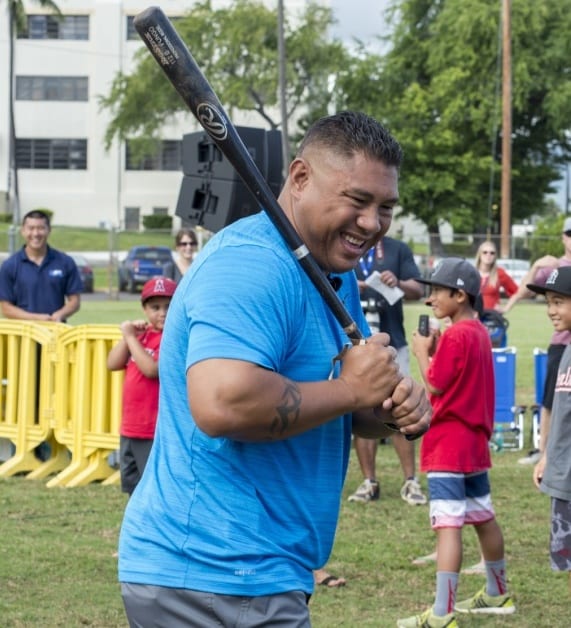
Why Benny Agbayani matters
Benny Agbayani’s baseball story reaches from Hawaiʻi to New York and Japan. For Filipino American readers, it is also a story about being seen. Agbayani reached the major leagues after being picked late in the draft. He became a fan favorite with the New York Mets, then built a second career with the Chiba Lotte Marines. His path showed young players that a Filipino American athlete from Hawaiʻi could find a place on some of baseball’s biggest stages. [1][2][3]
Roots in Hawaiʻi
Benny Peter Agbayani Jr. was born in Honolulu on December 28, 1971. He grew up in Aiea in a large, close family. His background reflects the many communities that shape Hawaiʻi. The Society for American Baseball Research reports that his father’s parents came from Ilocos Norte in the Philippines. Agbayani has also spoken publicly about young Filipino fans watching him play. [2][4][1]
That connection matters. Filipino Americans have a long history in Hawaiʻi, but national sports coverage has not always made their stories visible. Agbayani did not need to carry every part of that history on his shoulders. Still, each time he stepped onto a major league field, Filipino American families could see a familiar name in a sport where that kind of representation was rare. [4][1]
A late pick who kept working
Agbayani’s rise was not simple. He played at Hawaii Pacific University, where he became the school’s only first-team baseball All-American in 1993. HPU says he set strong marks in home runs and stolen bases and later became the first player from the school to reach Major League Baseball. The university inducted him into its athletics hall of fame in 2011. [5]
The New York Mets selected Agbayani in the 30th round of the 1993 draft. A pick that late comes with no promise of fame or even a major league job. He spent years in the minor leagues before making his Mets debut on June 17, 1998. [2]
His full chance came in 1999. Agbayani started fast, hit for power, and won over Mets fans. The team and its supporters embraced the nickname “Hawaiian Punch.” Over his major league career, he played for the Mets, Colorado Rockies, and Boston Red Sox. MLB lists his career totals at a .274 batting average, 39 home runs, and 156 runs batted in. [2]
October moments in New York
Agbayani’s place in Mets history rests on more than numbers. In Game 3 of the 2000 National League Division Series against the San Francisco Giants, he came to bat in the 13th inning with the score tied. His home run ended the game and gave New York control of the series. The Mets won the series the next day. [6]
Later that month, the Mets met the Yankees in the World Series. In Game 3, Agbayani hit an eighth-inning double that put the Mets ahead. New York held on for its only win of the series. Those two swings helped turn a player from Hawaiʻi into a lasting part of New York baseball memory. [6]
Agbayani’s appeal also came from the shape of his journey. He was not a top draft pick or a player built by hype. He had to wait, adjust, and keep earning another chance. That made his biggest moments feel shared by fans who understood what it meant to be overlooked. [2][6]
A second baseball home in Japan
After his major league years, Agbayani joined the Chiba Lotte Marines in Japan. He played six seasons there, from 2004 through 2009. Official Nippon Professional Baseball records show that he hit .315 with 35 home runs and 100 RBIs in his first season. [3]
In 2005, the Marines won the Japan Series for the first time in 31 years. The club then won the first Asia Series. Agbayani was named the Asia Series’s most valuable player. His years in Japan were not a short farewell. They were a major second chapter in which he helped a team win and built a strong bond with another group of fans. [7][4]
A legacy that keeps moving
Agbayani retired after the 2009 season and returned to Hawaiʻi. A 2024 MLB interview showed that he still speaks with warmth about his Mets years and about helping the next generation. His career now connects several baseball worlds: local fields in Hawaiʻi, the major leagues, postseason nights in New York, and championship baseball in Japan. [6][8][1]
For Filipino American readers, that range is part of his importance. Agbayani’s story does not fit into one place. It shows how identity can travel without being left behind. His career offered proof that talent from Hawaiʻi could reach the majors, that a Filipino American player could become a beloved figure in New York, and that the same athlete could find a new home across the Pacific. [4][2][3]
His most famous hits came in moments of pressure. His larger legacy came from persistence. Benny Agbayani kept working until doors opened, then made those openings easier for younger players to imagine. [6][1]
Sources
[1] Filipinos can fly — The Philippine Star — 2000-10-27 — accessed 2026-09-12
[4] Benny Agbayani — Society for American Baseball Research — accessed 2026-09-12
[6] Cult hero Agbayani's rise captivated Mets fans — MLB.com — 2019-12-03 — accessed 2026-09-12
[7] 2005 Japan Series — Nippon Professional Baseball — accessed 2026-09-12
[8] Benny had day in the sun. It's his son's turn — MLB.com — 2024-01-19 — accessed 2026-09-12 |
3 Comments
Join the conversation
Crazy to think he went from Aiea to NYC and then Japan. That’s a whole journey! Respect for never giving up after being picked so late.
I remember watching that 2000 playoff home run. Never saw my grandpa jump out of his chair so fast. Benny made those moments special for Hawaiʻi.
Agbayani’s career always made my dad so proud. Growing up Filipino in Hawaiʻi, we didn’t see a lot of people like us in sports. His journey stayed with me.